Reporting
TFRS/IFRS Reporting Software
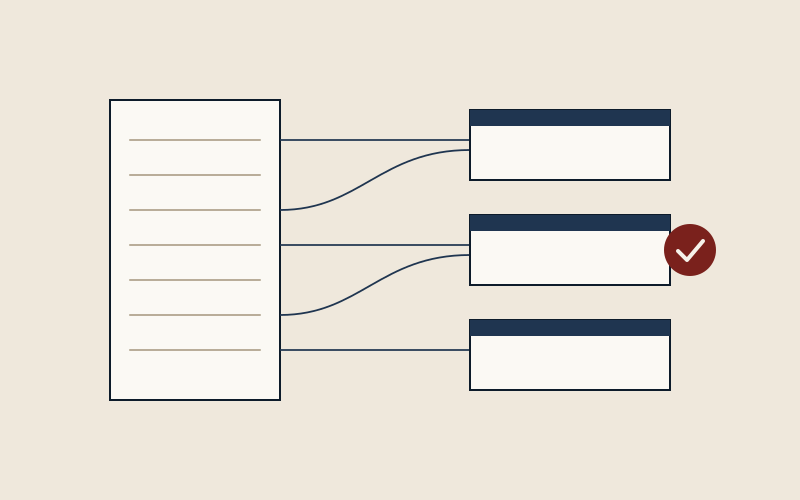
Reporting software that maps the statutory trial balance to the TFRS/IFRS and BOBİ FRS reporting structure, manages conversion entries and produces the financial statements and notes together with consistency checks.
Built by: Ufuk Süleyman Oflaz
The problem
In many companies, preparing financial statements under reporting standards is a spreadsheet exercise repeated by hand every period. When account mappings, conversion entries and notes live in separate files, the process slows down and inconsistencies between statements and notes are missed.
Why it matters
Reliable, timely financial reporting is a basic requirement for shareholders, lenders and auditors. A repeatable process delivers the same quality every period.
Approach
- Map Uniform Chart of Accounts lines permanently to reporting line items.
- Manage conversion and reclassification entries, with their explanations, in a separate layer.
- Produce the financial statements and note tables from the same data.
- Check statement–note, note–note and movement schedule relationships automatically on every run.
What it examines
- Trial balance to reporting line mapping
- Conversion and reclassification entries
- TFRS/IFRS and BOBİ FRS statement structures
- Financial statements and note tables
- Statement–note consistency checks
- Comparative periods
Example output
Balance sheet, income statement, cash flow statement and statement of changes in equity under reporting standards; note tables, a list of conversion entries and a consistency check report.
Limitations
- The software applies measurement and presentation decisions; it does not make them. Accounting estimates and judgements must be assessed separately.
- Changes in the standards must be reflected in the structures and checks.
Related writing
-
-
Financial Management
How do you build the finance function in a growing company?
-
Reporting
Why should the monthly close be fast and regular?