FP&A
Budget & Forecast Management Model
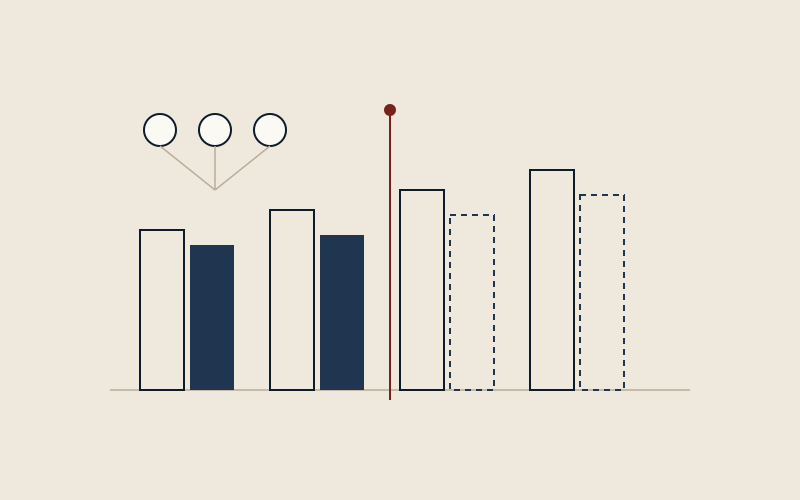
A financial planning model that turns the budget from a static spreadsheet into a living management system of assumptions, actuals and forecasts.
Built by: Ufuk Süleyman Oflaz
The problem
In many companies the budget is a table prepared once a year and put away once approved. When actuals diverge, the variance is hard to explain, because the numbers are not linked to the assumptions that produced them.
Why it matters
A budget built from numbers cannot explain a variance when one occurs. Management is left deciding without knowing what changed.
Approach
- Build the budget from the drivers that produce the numbers, not from the numbers: volume, price, headcount, unit cost, collection and payment terms.
- Link the income statement, balance sheet and cash flow to one set of assumptions.
- Bring actuals into the model every month and re-project the rest of the year with an updated forecast.
- Make variances explainable by splitting them into volume, price and cost effects.
What it examines
- Revenue drivers
- Headcount assumptions
- Operating expenses (OPEX) and capital expenditure (CAPEX)
- Working capital
- Financing
- Budget vs. actual
- Rolling forecast
- Scenario analysis
- Management summary
Example output
Driver assumptions, a budget versus actual-plus-forecast comparison, and a bridge splitting the revenue variance into volume, price and mix effects.
Limitations
- The driver structure has to be designed for each company; no template fits every business model.
- The model requires actuals to be brought in regularly and on time.
Related writing
-
-
Financial Management
Is the CFO’s job to prepare reports, or to build the decision system?
-
Financial Management
How do you measure debt service capacity? DSCR and net debt/EBITDA